Intermediate chess course in Surat
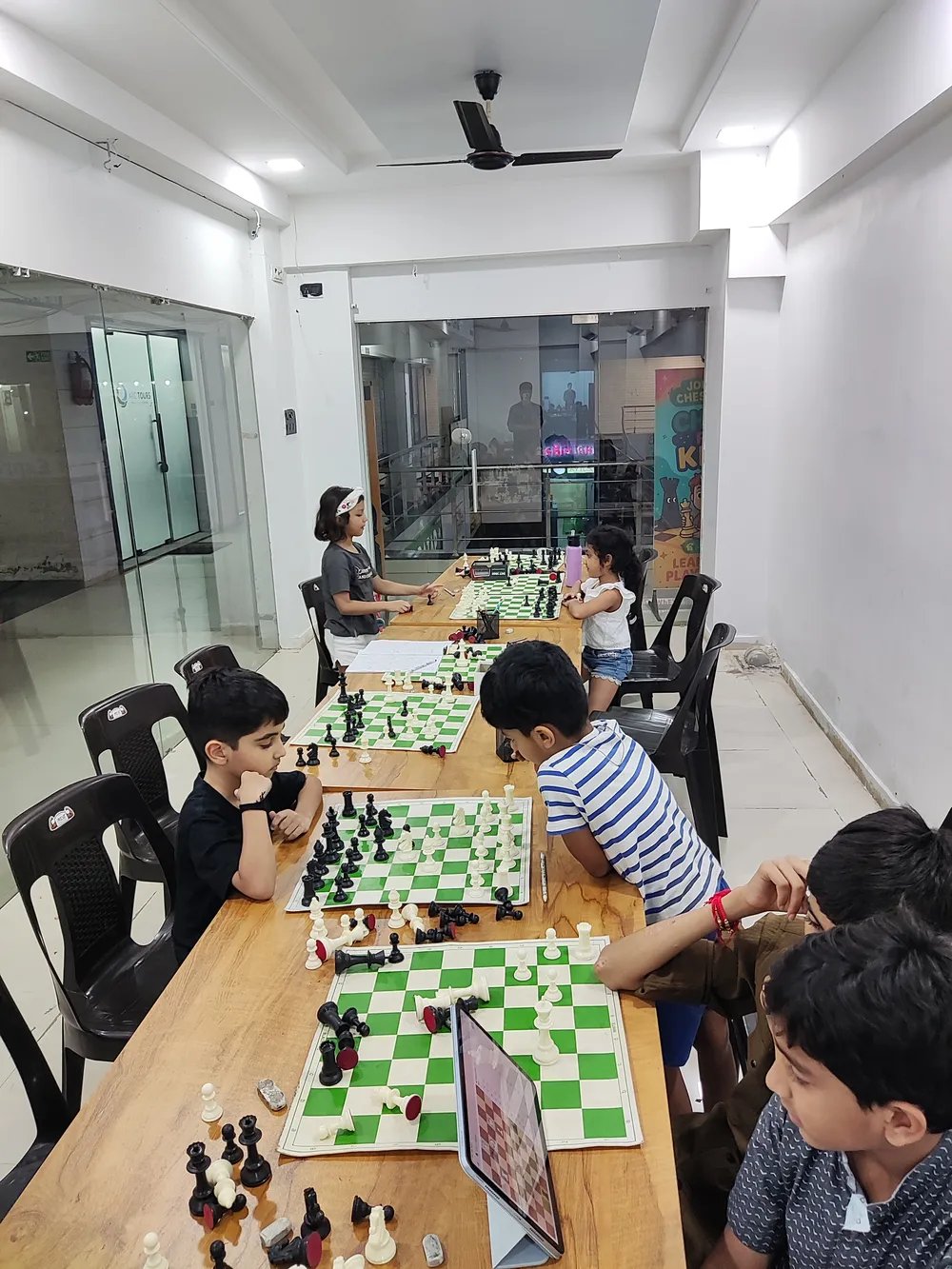
This is where a player stops reacting and starts calculating. Four levels build the tactical vocabulary — the pin, the double attack, the discovered check, the X-ray — alongside real endgame technique and the habit of thinking in short plans. Taught over the board in Vesu, Surat.
What the intermediate course covers
Every topic below is taught in class, with its own workbook and puzzle sheets. A student moves to the next level when the material is genuinely understood — not when the term ends. This course is part of the shared Knight, Rook and Queen class (your plan only decides how often you come), taught by head coach Rushi Shah at the club in Vesu.
Development 1 — The pin, the double attack, and calculating two moves ahead
Topics covered
- ◆Activity of pieces — strong squares
- ◆Double attack with the queen
- ◆The pin — restricting the opponent
- ◆Eliminating the defence
- ◆The three golden rules
- ◆Mate in two
- ◆Double attack with the knight
- ◆Mating with the rook
- ◆Double attack with rook, bishop, queen and king
- ◆The discovered attack
- ◆Defending against mate
By the end of Development 1 a student can
- ✓Execute double attacks with every piece on the board
- ✓Use the pin to win material
- ✓Calculate two moves ahead to force mate in two
- ✓Deliver checkmate with king and rook
Development 2 — Pawn endings, opening principles, and real defensive technique
Topics covered
- ◆Advanced mating patterns and double-check mate
- ◆Pawn endings — king and pawn technique
- ◆The opening — first principles of development
- ◆Clever defensive technique
- ◆Board vision training
- ◆Working out forced mate
- ◆Stalemate — forcing it, avoiding it, lifting it
- ◆Winning material
- ◆Playing rules and special situations
By the end of Development 2 a student can
- ✓Recognise a winning pawn ending
- ✓Open a game on sound principles
- ✓Calculate a forced mating sequence
- ✓Use stalemate as a defensive weapon
- ✓See the whole board more sharply in a real game
Development 3 — X-ray attacks, key squares, and thinking in short plans
Topics covered
- ◆Discovered and double check
- ◆Attack on a pinned piece
- ◆Mate through access
- ◆The square of the pawn
- ◆Eliminating the defence — advanced
- ◆Defending against a double attack
- ◆The mini plan — thinking in short plans
- ◆Advanced drawing technique
- ◆The X-ray attack
- ◆The opening — completing development
- ◆Defending against a pin
- ◆Mobility — improving piece activity
- ◆Key squares
- ◆Creating and answering threats
By the end of Development 3 a student can
- ✓Land discovered and double checks for a decisive attack
- ✓Calculate an X-ray attack through a piece
- ✓Think in short plans instead of move by move
- ✓Use key squares and the square of the pawn in endings
- ✓Finish development properly out of the opening
Development 4 — Luring, the magnet, passed pawns, and attacking the king
Topics covered
- ◆Interfering — breaking up coordination
- ◆Luring a piece to a bad square
- ◆Blocking enemy pieces and pawns
- ◆Thinking ahead — deeper calculation
- ◆The pin and the lure combined
- ◆The passed pawn — creating and promoting it
- ◆The magnet — forcing the king into the open
- ◆Weak pawns
- ◆Converting a material advantage
- ◆Chasing and targeting
- ◆Attack on the king
- ◆The seventh rank
- ◆Endgame strategy
- ◆Clearing lines and squares
- ◆Queen against pawn
- ◆Gaining an opening advantage
By the end of Development 4 a student can
- ✓Combine several tactical ideas in one sequence
- ✓Force the enemy king into the open with the magnet
- ✓Find and exploit weak pawns and weak squares
- ✓Convert an extra piece or pawn into a win
- ✓Coordinate a full attack on the king
Where this sits in the full path
Ten levels run from a first look at the board through to tournament-ready chess. See them all on the curriculum page.
Not sure which level your child starts at?
That is exactly what the free trial is for. One session, sixty minutes, and an honest read on where to begin — from the head coach, over a real board in Vesu.